
Home · Procedures · LASIK

Procedures

LASIK

Laser reshaping of the cornea to reduce or remove dependence on glasses and contact lenses. Quick, outpatient, and backed by more than two decades of practice.

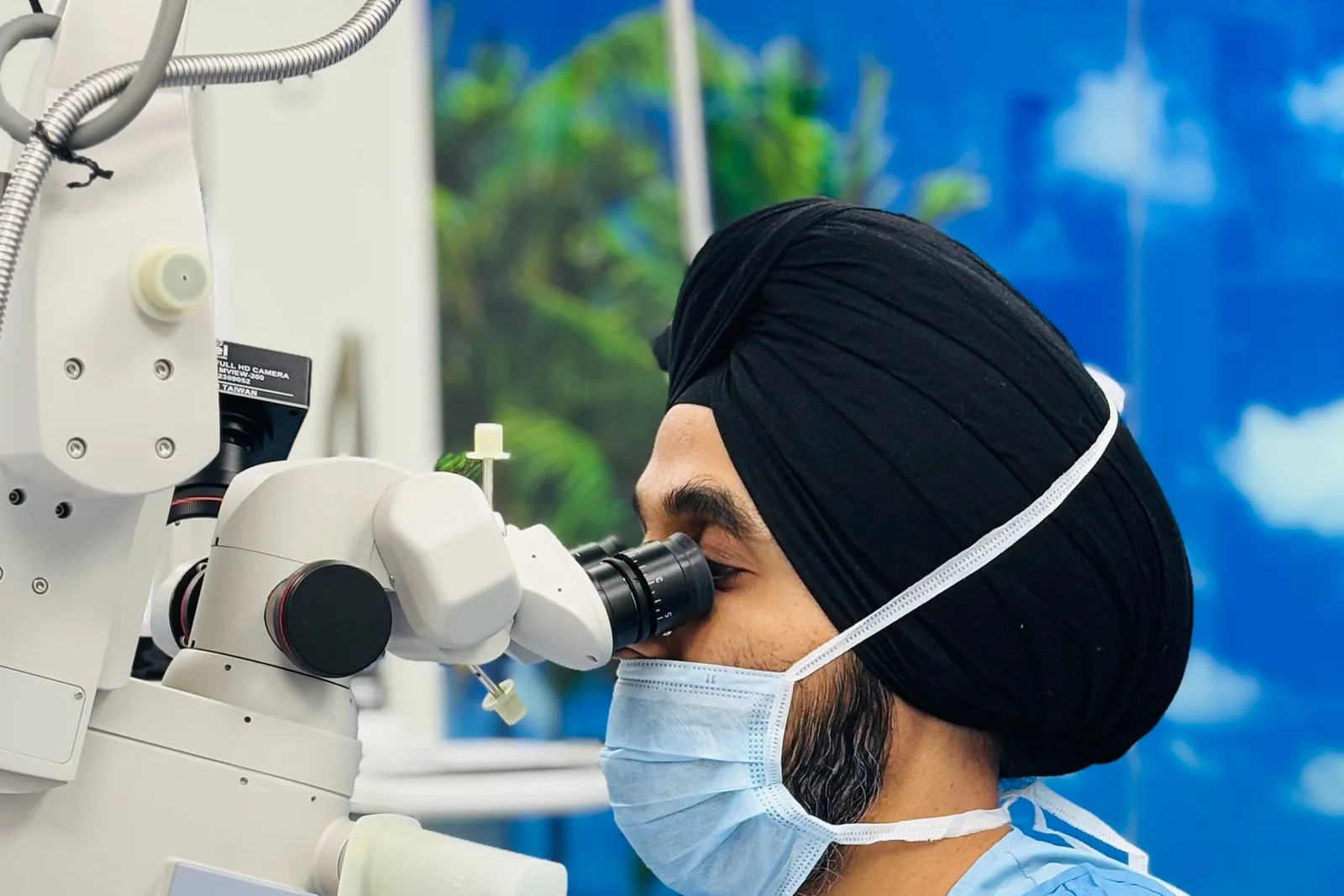
Eye surgeon at the laser microscope during a procedure

What it is

LASIK corrects the way the eye focuses by changing the shape of the cornea, the clear dome at the front of the eye. In a nearsighted eye light comes to a focus in front of the retina; in a farsighted eye, behind it; with astigmatism, at more than one point. Reshaping the cornea by a few hundredths of a millimetre moves that focus.

It is the most widely performed refractive operation in the world, and also one of the most carefully screened. Most of the work happens before surgery: measuring the thickness and shape of the cornea to confirm it can be treated safely. People who are not good candidates are told so, and often have a better option in a different procedure.

CorneaLensRetinaLight
The highlighted structure is the one this procedure treats. Schematic, not to scale.

What's included

  • Myopia, hyperopia and astigmatism within treatable ranges
  • Corneal topography and thickness measured to confirm candidacy
  • Both eyes in the same session, in most cases
  • Next-day check; clearance to fly based on how you're healing
  • Follow-up coordinated with your optometrist at home

In 24 seconds

LASIK: how it works

Illustrative schematic, no sound. Only the surgeon decides candidacy, after a full in-clinic evaluation.

Who it suits

Usually a good fit

  • Adults 18 or older whose prescription has been stable for at least a year
  • Myopia, hyperopia or astigmatism within the treatable range
  • Corneas thick and regular enough on topography
  • Healthy eyes: no active infection, controlled dry eye

Usually not, or not yet

  • Keratoconus or an irregular or thin cornea
  • Pregnancy or nursing, because the prescription shifts
  • Uncontrolled autoimmune disease or diabetes
  • Over about 45 and mainly bothered by reading glasses: lens exchange is usually the better conversation

Take the two-minute candidate check →

The procedure, step by step

1

Measurements in clinic

Corneal topography, thickness, pupil size and a dilated exam. The surgery is confirmed only if these agree with what the video evaluation suggested.

2

Numbing drops

No injections and no general anaesthetic. A small holder keeps the eyelids open so you do not have to worry about blinking.

3

Flap and laser

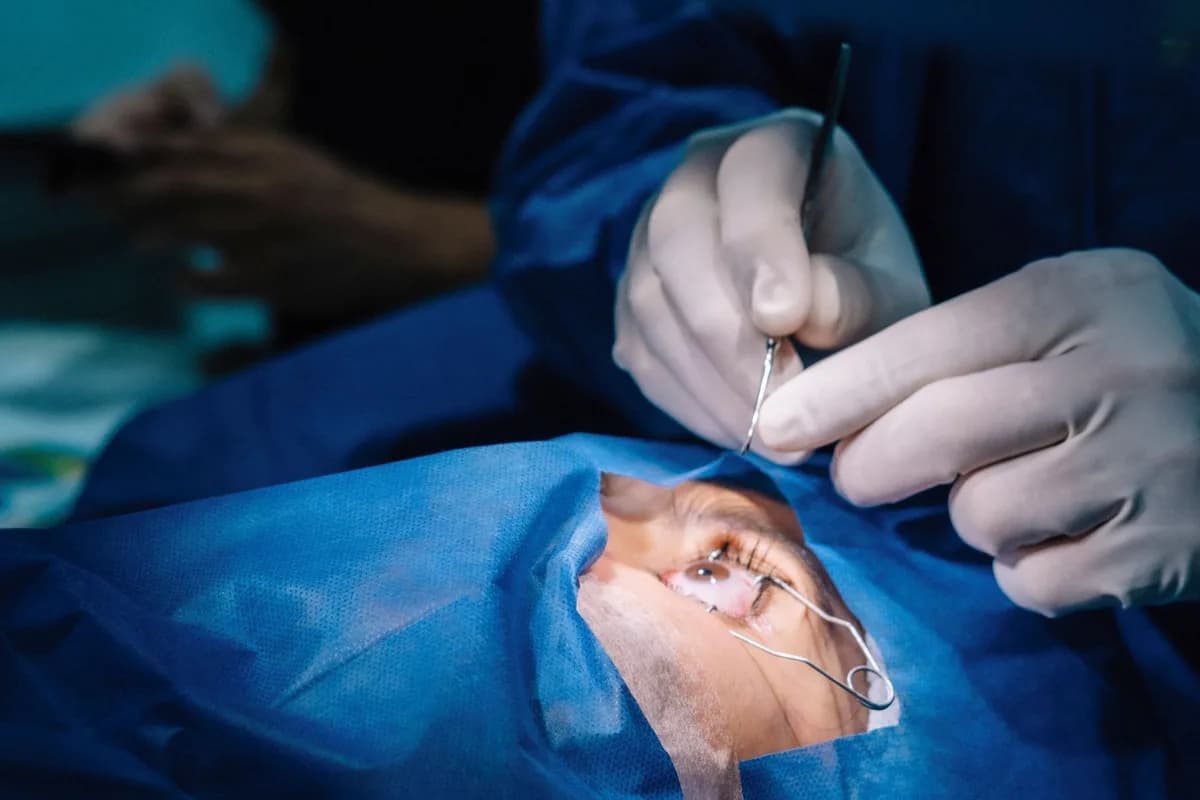
A thin flap is created in the cornea and folded back, the laser reshapes the tissue beneath for less than a minute, and the flap is laid back in place. It holds without stitches.

4

Next-day check

Dr. Serrano examines the eye himself the following day. Clearance to fly is given in writing at that visit, never before it.

Recovery timeline

  1. First hours

    Burning, tearing and light sensitivity are normal. The best thing you can do is go back to the hotel and sleep with the eye shields on.

  2. Next day

    In-person check. Most people already see well enough for ordinary activities, though vision still fluctuates.

  3. First week

    Drops on schedule. No eye rubbing, swimming, hot tubs or eye make-up. Shields at night.

  4. One to three months

    Vision and any dryness settle. Check-ups with your own optometrist at home, with Dr. Serrano available by video.

Risks and side effects

  • Dry eye is the most common side effect and is usually temporary; it is treated with drops
  • Glare or halos around lights at night, which tend to fade over the first months
  • Under- or over-correction; some people need an enhancement or still use glasses for some tasks
  • Flap problems, infection and corneal weakening (ectasia) are rare, and are the reason for the screening beforehand
  • LASIK does not stop presbyopia: reading glasses still arrive in the mid-forties

Every eye is different. Dr. Serrano goes through the risks that apply to yours at the evaluation, before you decide anything.

How the options compare

A summary to orient you. The evaluation decides, not the table.

FeatureLens exchangeLASIKSMILECataract surgery
TreatsPresbyopia and high prescriptionsMyopia, hyperopia, astigmatismMyopia, astigmatismA clouded natural lens
Works onThe lens, replacedCornea, under a flapCornea, no flapThe lens, replaced
Typical ageAbout 45 and over18 to mid-40s18 to mid-40sUsually 60 and over
Helps with reading visionDepends on the lens chosenNoNoDepends on the lens chosen
Cataract later in that eyeNoStill possibleStill possibleNo
Typical stay in CaboSet by your plan3 to 4 nights3 to 4 nightsSet by your plan

How it's done

How it's done

What each technique does, who it's for and what to expect. Anything that doesn't fit here gets answered at your evaluation.

LASIK
Excimer laser · Corneal surgery

LASIK

A thin flap is created on the cornea's surface, the laser reshapes the tissue beneath it to correct the prescription, and the flap is laid back in place. Treats myopia, hyperopia and astigmatism within certain ranges.

  • Both eyes are usually done the same day
  • Mild discomfort for the first hours; most people work within 1–2 days
  • Candidacy depends on corneal thickness and shape
Duration · ~15 min both eyesCheck-up · next dayTrip · 3–4 nights in Cabo

Frequently asked questions

What everyone asks before deciding

How do I know if I'm a candidate?

Your prescription gives a first idea, but the decision depends on corneal thickness and shape, a stable prescription and your eye health. That's why we ask for a recent exam and Dr. Serrano reviews it by video before you travel.

Does it hurt?

Anaesthetic drops are used. Pressure during the procedure and a gritty, stinging feeling for the first hours are normal.

How many days do I need in Cabo?

Usually three or four nights: arrive, surgery, next-day check, and fly home with Dr. Serrano's clearance.

Is it safe to have LASIK in Mexico?

Safety depends on the surgeon, the screening and the follow-up, not on the country. What to check anywhere: that the surgeon's licence numbers can be verified, that the surgeon who evaluates you is the one who operates, that topography and corneal thickness are measured before anything is confirmed, and that there is an in-person check the next day plus a written plan for home. Dr. Serrano's licences are published on this site.

How soon can I fly after LASIK?

After the next-day check and written clearance. Cabin pressure is not the concern; dry cabin air is, so you travel with lubricating drops and use them often. Trips are planned as three to four nights for that reason.

Can I have LASIK after 40 or 50?

Age alone does not rule it out if the eye is healthy. But from the mid-forties the natural lens stops focusing up close, which LASIK does not fix, and later it clouds into a cataract. That is why lens exchange is often the better discussion after about 45.

Does LASIK wear off?

The change to the cornea is permanent. The rest of the eye keeps ageing: presbyopia in the forties, cataract later. A small number of people regress slightly and may be offered an enhancement.

Book your evaluation

It all starts with an honest evaluation

  • Dr. Serrano reviews your case before any surgery is booked
  • Same-day reply on WhatsApp
  • Care in English and Spanish
Book online (see times)Continue on WhatsAppCall +1 (858) 585-7814

Or write to dr.tserrano@gmail.com